

Digital Twin Global Forum 16th
The 16th Digital Twin Global Forum took place on November 18, 2026, at Hubei Polytechnic University in Huangshi, China. Held under the theme "Digital Twin-Enabled Industrial Innovation: From Models to Systems, from Technologies to Applications," the event brought together 80 experts, faculty members and graduate students from universities in China and Malaysia.
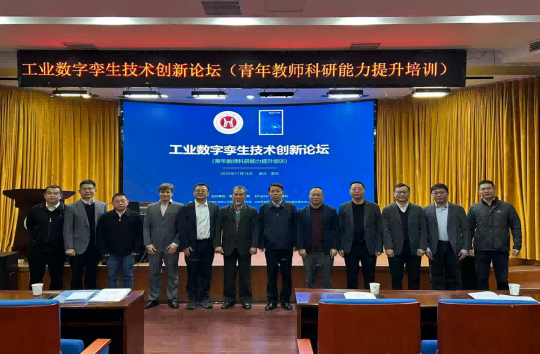
The forum was jointly organized by Hubei Polytechnic University and the journal Digital Twin, with co-organization by the university's Office of Human Resources, Office of Research, and AI Innovation Research Institute, together with the International Research Center for Digital Twin at Beihang University.
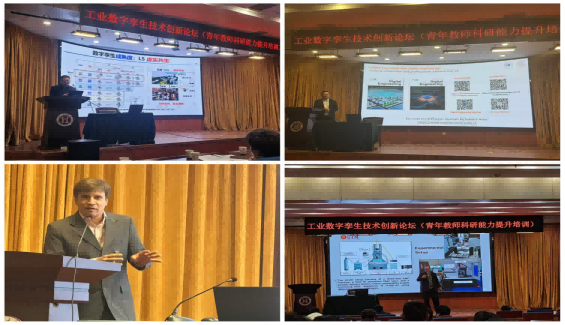
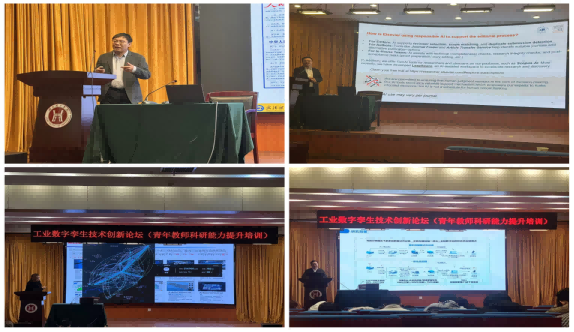
The forum featured seven presentations on digital twin technologies and industrial applications. Topics included laser direct deposition and process optimization for titanium alloy additive manufacturing, large-scale personalized collaborative manufacturing, hybrid modeling integrating physical mechanisms and data-driven approaches, digital twin-enabled smart manufacturing, integrated production and distribution scheduling, and intelligent operation and maintenance of water equipment. The presentations also covered international academic publishing and the development of digital twin conferences, with introductions to the journals Digital Twin and Digital Engineering.
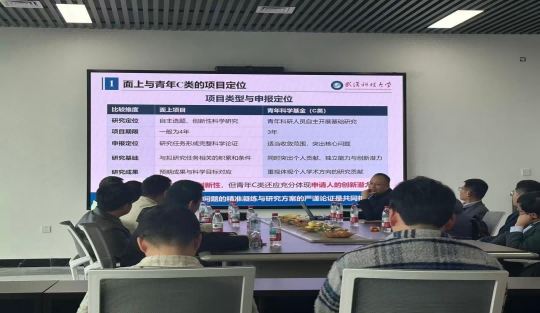
The afternoon program included a research development workshop for early-career faculty. Professors from Beihang University, Wuhan University of Technology, Wuhan University of Science and Technology, and Three Gorges University shared their experience in research funding applications, research topic development, proposal design and evaluation. Two roundtable sessions further explored academic publishing and submissions, as well as research planning and career development.
The 16th Digital Twin Global Forum provided an international platform for academic exchange and collaboration in digital twin technologies and industrial applications. It also fostered connections between researchers and early-career faculty, encouraging further cooperation in research, academic publishing and talent development.